SASE for Mid-Sized Businesses in Russia: Components, Real Costs, and Choosing Between Cato, Cloudflare One, and Domestic Alternatives
Your expert guide to SASE for mid-sized businesses in Russia: what the stack includes, how to plan your migration, real cost breakdowns, insights on Cato and Cloudflare One in Russia, where to find domestic alternatives, plus checklists, frameworks, case studies, and actionable steps.
Content of the article
- Introduction: why it matters now and what you'll gain
- Basics: core sase concepts to speak the same language
- Deep dive: how sase works under the hood
- Practice 1: assessing your sase readiness (2-4 week methodology)
- Practice 2: sase implementation roadmap (90-180-360 days)
- Practice 3: sase architecture patterns for mid-sized businesses in russia
- Practice 4: real costs and financial models (tco/roi)
- Vendor overview: cato networks, cloudflare one, and domestic alternatives
- Practice 5: smooth migration from mpls and classic vpn to sase
- Practice 6: writing sase security policies that don’t slow down business
- Practice 7: managing and monitoring sase operations
- Common mistakes: what to avoid
- Tools and resources: what to use in practice
- Case studies and outcomes: what it looks like in numbers
- Faq: tough questions answered
- Conclusion: turning strategy into results
Introduction: Why It Matters Now and What You'll Gain
If you're leading IT and security for a mid-sized business in Russia, you're juggling quite a few challenges at once: ensuring fast, stable access for your team across offices, branches, and remote locations; meeting data protection and regulatory requirements; and cutting costs while managing operational risks. In recent years, distributed architectures, hybrid work models, and cloud migrations of critical services have exploded in growth. That's why SASE (Secure Access Service Edge) isn’t just a buzzword—it’s a practical way to unify networking and security into one manageable layer.
In this article, you’ll get a comprehensive overview: what makes up the SASE stack, why it’s uniquely beneficial for mid-sized businesses in Russia, what the real total cost of ownership looks like, when international stacks (like Cato Networks and Cloudflare One) make sense, when to lean on domestic solutions, and when a hybrid approach fits best. We’ll walk through ready-to-use step-by-step methodologies, planning frameworks, checklists, common pitfalls, and real-world case studies. By the end, you'll have a plan to put on your desk tomorrow and start implementing.
Basics: Core SASE Concepts to Speak the Same Language
What Is SASE?
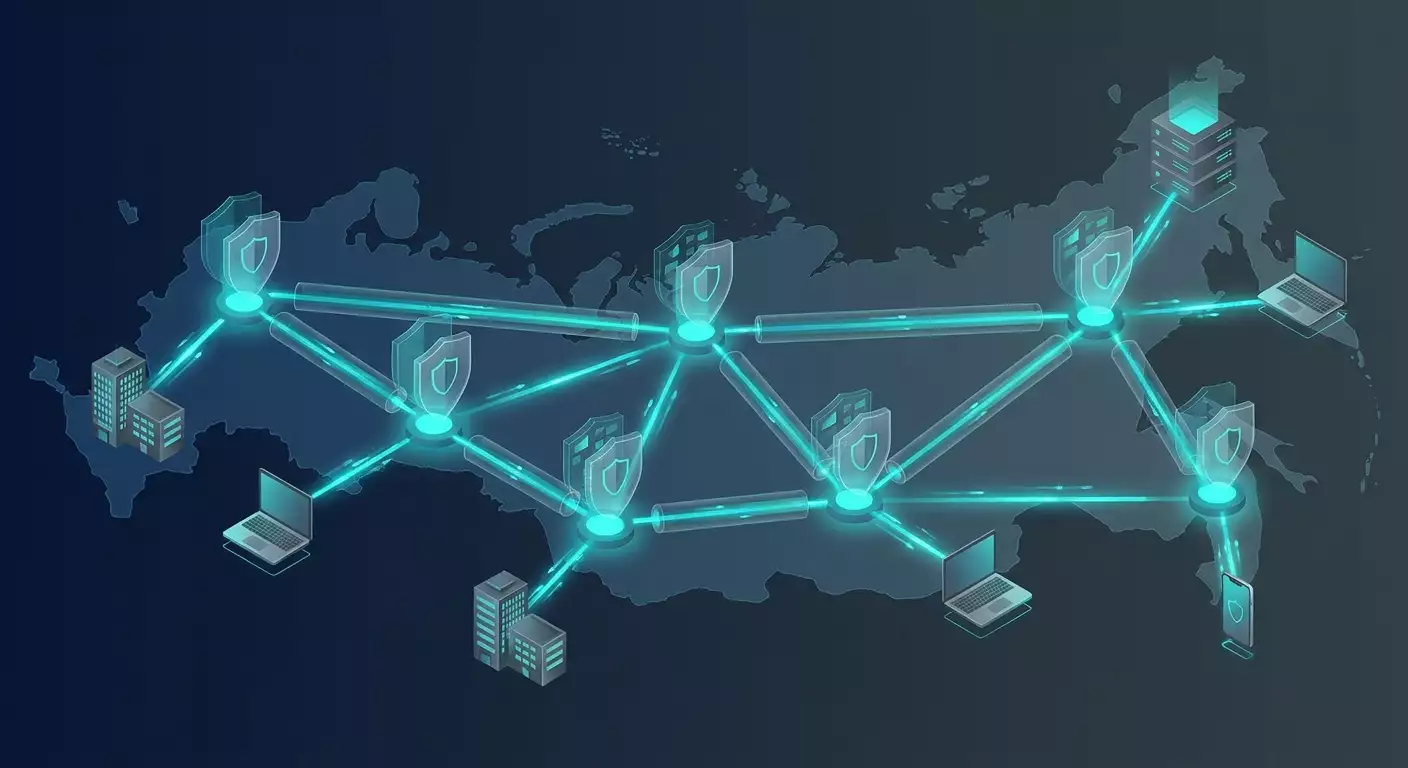
SASE is a model that merges network functions (SD-WAN/connectivity) with security functions (SSE) into a cloud-delivered platform hosted across distributed Points of Presence (PoPs). Instead of building a "hub" to your own data center and routing traffic through a centralized inspection point, SASE offers a user-proximate cloud perimeter applying the same policies across the board—whether users are in offices, branches, clouds, or data centers.
What’s in the Stack?
- SD-WAN — smart routing over the internet, encryption, link aggregation, QoS, and Forward Error Correction (FEC). It replaces or supplements MPLS/VPN between sites.
- SSE (Secure Service Edge) — cloud-delivered security layer including SWG (secure web gateway), ZTNA (Zero Trust Network Access), CASB, FWaaS (firewall-as-a-service), DLP, DNS filtering, RBI (browser isolation), anti-phishing, and sandboxing.
- Identity and Context — SSO (SAML/OIDC), MFA, user/device posture assessment, geolocation, and risk scoring.
- PoPs and Global Network — geographically dispersed presence points with private backhaul across the SASE provider’s infrastructure.
Why It Pays Off for Mid-Sized Companies
- Unified Policies instead of a patchwork of individual tools at each branch.
- Easy Scalability: open a new office, connect to the closest PoP, and get all functions instantly.
- Pain-Free Hybrid Work: remote users get the same policies as those in the office.
- Lower TCO thanks to unification and cutting down on hardware and costly MPLS circuits.
- Transparent Compliance through centralized logging, policies, and reporting.
Local Constraints and Nuances in Russia
Important context: legal and technical limits tied to 152-FZ (personal data), 187-FZ (critical information infrastructure), FSTEK/FSB certifications for protection tools and cryptography, and data localization rules. International SASE providers may face restrictions on service availability and contracts with Russian legal entities, plus legal risks for operators. Hence the popularity of hybrid setups: combining cloud SSE services with local VPNs/NGFWs, or going fully domestic.
Key Terms to Know
- Zero Trust — access granted on a "least privilege" basis, based on checks of user, device, and context.
- Inline Decryption — decrypting TLS traffic for deep inspection (critical for SWG/DLP).
- PoP — a provider’s presence point where clients/sites connect.
- Split Tunneling — routing some traffic through SASE cloud, and some directly.
- CASB Modes — SaaS API monitoring, inline proxy, forward proxy, reverse proxy.
Deep Dive: How SASE Works Under the Hood
Planes Architecture
- Data Plane — channels and PoPs where traffic flows. Key protocols include IPsec, WireGuard, TLS over QUIC, plus FEC, jitter buffering, and latency SLAs.
- Control Plane — managing policies, routing, user/device inventory, centralized logging, and analytics.
Protocols and Performance
Branches typically use IPsec or a proprietary UDP tunnel from the SD-WAN provider. End users have an agent that establishes a tunnel based on WireGuard, IPsec/IKEv2, or TLS/QUIC. This means minimal latency on unstable internet via FEC and fast reconnections, with modern QUIC especially effective on mobile networks.
Inline Inspection and Encryption
SWG and FWaaS often require TLS decryption, which brings certificate management challenges like handling corporate root CAs and dealing with certificate pinning in apps. Plan your category-based exceptions in advance and thoroughly test critical SaaS platforms.
Identity and Context
Zero Trust hinges on strong authentication and device attestation. Typically: SSO through corporate IdPs (e.g., AD FS, Keycloak, or commercial providers), MFA via OTP/push notifications, and device posture checks (disk encryption, antivirus, OS versions, certificate presence).
Observability and SLOs
- Metrics: latency to PoP, packet loss, steady-state throughput, TLS decryption time, policy hit rates.
- Logs: authentication audits, policy changes, DLP/Anti-Malware incidents, critical app accesses.
- SLOs: latency targets for key apps (RDP/VDI, ERP, VoIP), PoP availability goals, incident resolution times.
Trends for 2026
- eBPF Clients on workstations for advanced traffic routing without TLS interception at proxies.
- HTTP/3 and QUIC becoming defaults in client tunnels and inter-PoP connectivity.
- AI-Powered Access Policies with risk scoring based on behavioral patterns and device telemetry.
- Data Security Posture Management atop SSE: end-to-end control over data stored and transferred across SaaS, IaaS, mail, and endpoints.
- BYO Notification: automated just-in-time user prompts explaining access denials to reduce SOC and help desk load.
Practice 1: Assessing Your SASE Readiness (2-4 Week Methodology)
Step 1. Catalog Your Apps and Data
- Create an application inventory: on-prem, IaaS, SaaS; note owners, criticality, data types (personal data, trade secrets, finance), and data location.
- Build a traffic flow map: where traffic comes from and goes to (offices, remote users, partners, contractors), including ports and protocols.
- Define a requirements checklist: compliance (152-FZ, FSTEK as needed), SLA, logging, and retention.
Step 2. Analyze Your Current Network and Security
- Inventory your WAN: providers, channel types, MPLS, IPsec, bandwidth, reliability, costs.
- Document edge devices: NGFWs, UTMs, proxies, VPN concentrators, authentication, MFA.
- Collect metrics: latency to key SaaS, channel utilization, incidents over 6-12 months.
Step 3. Define Target Access Profiles
- User personas: office staff, remote users, frontline personnel, admins, contractors.
- Matrix model: which apps can be accessed by whom, under what context (own laptop vs shared, attested vs not).
Step 4. Gap Analysis and Prioritization
Match your current state to your desired SASE vision. Create a backlog: quick wins (e.g., ZTNA for a few critical apps for remote users) and big projects (migrating branches from MPLS to SD-WAN). Identify 3-5 KPIs: incident reduction, availability improvement, OPEX savings.
Checklist on Completion
- Application and data maps.
- Zero Trust access model.
- Inventory of network and security assets.
- Migration timeline.
- Risk assessments and assumptions.
Practice 2: SASE Implementation Roadmap (90-180-360 Days)
Phase 1 (0-90 days): Quick Wins and Pilot
- ZTNA Pilot: connect 1-2 critical internal apps (e.g., accounting system, developer portal) with device-based MFA and geographic restrictions.
- SWG for Remote Workers: enable cloud web filtering, categorization, anti-phishing; configure selective decryption for banking/payment sites.
- Integration Inventory: SSO, MFA, EDR, MDM; define minimum device posture standards.
- SD-WAN Migration for One Site: where 2-3 independent internet channels exist.
Phase 2 (90-180 days): Expanding Coverage
- Branch Onboarding in Waves: 3-5 offices per sprint, repeatable cutover procedures.
- DLP Policies for sensitive data over email, web forms, SaaS; implement permission workflows.
- CASB API for top SaaS: monitor public links, external users, shadow IT.
- SOC Processes: correlate SSE events with EDR/SIEM, create playbooks.
Phase 3 (180-360 days): Optimization and Legacy Simplification
- Decommission Legacy VPN Concentrators for scenarios covered by ZTNA.
- Route Reconfiguration: more local breakouts through SASE PoPs, less backhaul to data centers.
- Cost Review: renegotiate MPLS contracts, remove branch UTMs, unify licenses.
- Retrospective: compare KPIs before and after, refine SLOs and budgets.
RACI and Roles
- SASE Product Owner (usually CISO/CTO): goals, priorities, budget.
- Network Architect: SD-WAN, routing, PoP connections.
- Security Engineer: policies for SWG, ZTNA, DLP; integrations with IdP/EDR.
- Operations Team: onboarding branches/users, SLA monitoring.
- Business App Owners: requirements and acceptance.
POC: Rapid Start Without Bureaucracy
For short pilots and testing hypotheses within Russia, quick deployment corporate VPN services with controlled configs are ideal. vpn.how lets you spin up a personal VPN server (dedicated IP, not shared) within 5 minutes of payment, supporting protocols like WireGuard, OpenVPN, IKEv2, L2TP, SSTP. Server locations cover Moscow, St. Petersburg, Amsterdam, Frankfurt, London, New York, San Jose, Chicago, Singapore, Sydney, Madrid, Helsinki, Stockholm, Warsaw, Copenhagen, Stavanger. Payment options include Russian cards (e.g., Tinkoff, Ozon), SBP, and USDT/BTC. Rates start at 490₽ per day or 2490₽ monthly with discounts for longer terms and no-logs policy. This platform is great for pilots and POCs when you need to quickly check routing, latency, SaaS availability, or temporarily grant contractor access without lengthy procurement. For production, it’s better to move to your own infrastructure or certified GOST-VPN solutions.
Practice 3: SASE Architecture Patterns for Mid-Sized Businesses in Russia
Pattern A: 1-10 Branches, Up to 1000 Employees
- Data Center/Cloud: connect to the nearest PoP via IPsec/express routing; return path through SASE FWaaS.
- Branches: CPE with dual ISP lines, tunnel to PoP, local breakout for SaaS.
- Users: ZTNA/SWG agent with MFA and minimal posture checks (disk encryption, EDR).
- Policies: web categories, shadow SaaS detection, access to internal apps based on AD groups and risk levels.
Pattern B: 11-50 Branches, Nationwide Geography
- SD-WAN for channel optimization: active-active, FEC, sub-segmentation by traffic type (VoIP, VDI, SaaS).
- Caching/Optimization for repetitive content (CDN-aware), selective TLS inspection.
- Local Regulations: exceptions for regions with high latency; PoP selection based on latency and load.
Pattern C: Hybrid with Domestic Components
Where legal requirements and availability of foreign services are limited, a hybrid emerges: cloud SSE components accessible in Russia combined with domestic VPN/NGFW and proxies. ZTNA may be handled by a domestic access gateway, while web filtering happens via a local SWG. Identity is managed through corporate IdPs supporting SAML/OIDC.
Segmentation and Zero Trust
- Access Segments: users, contractors, admins, service accounts—all with distinct device-type and time-based policies.
- "Application Identity" Model: publishing internal services by app name rather than IP networks, with session-level logging.
- Just-in-Time Access for admins with mandatory MFA and session audio recording (via PAM if available).
High Availability and Failover
- Two PoPs by Default for each branch/site, with SLA-backed tunnel failover.
- Local Break-Glass VPN for emergency SSE outages.
- Out-of-Band Management for CPE and critical devices.
Practice 4: Real Costs and Financial Models (TCO/ROI)
Cost Structure
- Licenses: monthly/per-user/site fees; optional DLP, RBI, CASB add-ons.
- Hardware: CPE for branches, potential router upgrades.
- Connectivity: replacing/adding internet links, retiring MPLS.
- Operations: implementation, onboarding, monitoring, SOC, training.
- Hidden Costs: downtime during migrations, PKI adaptations for TLS inspection, SSO integrations.
Ballpark Figures for Mid-Sized Businesses
Based on deployment experience and public price lists, for 300-1500 users in Russia expect roughly:
- SSE per user (SWG+ZTNA without heavy DLP): about $8-20 USD/user/month. Currency and contract restrictions apply.
- Full SASE (including SD-WAN/site licenses): an extra $50-150 USD/site/month depending on throughput.
- Domestic Hybrid: NGFW/VPN licensing per site plus cloud SWG/identity subscriptions; often 500-1500 ₽/user/month, with MPLS savings.
- CapEx on CPE: initial purchase from 40,000 to 150,000 ₽ per branch if new SD-WAN-capable hardware is needed.
ROI Outline
- Add up MPLS expenses and branch UTM/proxy support.
- Compare with an internet+SD-WAN and cloud SSE model.
- Include savings from retiring VPN concentrators and fewer incidents (help desk time, downtime).
- Estimate Time to Value: often 2-4 months with phased rollout.
Practical Procurement Tips
- Opt for flexible 12-month licenses with user count adjustment options.
- Negotiate SLA and penalties for PoP downtime, including measurement methods.
- Ensure log transparency: formats, SIEM export, and compliance with 152-FZ.
- Budget 10-15% for integrations and fine-tuning security policies.
Vendor Overview: Cato Networks, Cloudflare One, and Domestic Alternatives
Cato Networks
Strengths: proprietary global PoP network with private backbone, native SD-WAN and SSE integration, mature operations, predictable performance. User-friendly unified client and centralized policies. Russian Market Limitations: availability and contract issues with Russian entities, plus legal considerations around data and billing. Often used via foreign HQs or subsidiaries if allowed.
Cloudflare One
Strengths: extensive PoP coverage, high-performance proxies on a global Anycast network, strong SWG/Zero Trust stack, seamless SaaS/IdP integration, excellent HTTP/3/QUIC support. Russian Market Limitations: service availability and terms for Russian customers may be restricted, requiring thorough legal review and contract/payment feasibility tests.
Domestic and Hybrid Solutions
Fully integrated "monolithic" SASE within Russian jurisdiction is often replaced by composite stacks:
- SD-WAN and operator services: major Russian telcos offer L3VPN/MPLS alternatives and managed SD-WAN—reliable for backbones, with centralized SLA and management.
- NGFW/VPN: a wide range of domestic products supporting IPsec/IKEv2 and cloud controllers, used both at branch perimeters and for secure inter-site traffic.
- SWG/DNS Filtering: cloud and on-prem web filtering with categorization and anti-phishing, integrating with AD and compliant reporting under 152-FZ.
- ZTNA/Proxy Access: several vendors offer ZTNA/SDP modules or proxy publication of internal apps featuring MFA and audit.
- DLP/Data Control: mature domestic DLP systems provide inline and endpoint control, integrating with mail, web, and file stores.
Pro Tip: demand from vendors compliance maps showing their functionality against SASE components (SD-WAN, SWG, ZTNA, CASB, FWaaS, DLP) and clear deployment diagrams covering logs, data storage, and compatibility with your security operations.
Practice 5: Smooth Migration from MPLS and Classic VPN to SASE
Transition Theory
The main idea is to avoid a big bang switch. Migrate traffic in phases: start user internet through SWG, then give access to internal apps via ZTNA, and only after that migrate branch channels to SD-WAN—gradually phasing out MPLS from critical paths.
Step-by-Step Cutover Plan
- Duplication: alongside existing channels, establish a tunnel to the PoP; route only some users’ web traffic through SWG.
- App Pilot: publish 1-2 internal services through ZTNA for a test group.
- Segmentation: create risk-based profiles (admins/normal users/contractors), enable MFA and basic posture checks.
- Branch Waves: migrate 2-3 offices per sprint, measuring metrics before and after with clear rollback options.
- Legacy Deactivation: once stable, retire branch UTM/proxies and reduce MPLS usage.
Quality Checkpoints
- ZTNA session setup time (target ≤ 2 seconds).
- Average latency to PoP for remote users (target ≤ 50-70 ms; may be higher in regions).
- Phishing/malware incident reduction (target −30% in 3-6 months).
- Stable VoIP/video over SD-WAN (loss <1%, jitter compensated).
Practice 6: Writing SASE Security Policies That Don’t Slow Down Business
Policy Development Framework
- Classify data: public, internal, confidential, strictly confidential.
- Define personas and contexts: employee, contractor, admin; corporate or personal device; trusted or untrusted networks.
- Plan exceptions ahead: finance, healthcare, banking domains exempted from TLS decryption.
- Choose enforcement points: SWG, ZTNA, CASB API, DLP endpoint, FWaaS.
- Pilot in alert-only mode, then gradually enable blocking.
Effective Rule Templates
- SWG: block illegitimate categories (malware, cryptomining), strictly control executable downloads, warn and confirm before accessing file sharing and exchange platforms.
- ZTNA: access restricted by AD groups, MFA mandatory, just-in-time admin access, disallow BYOD without posture checks.
- CASB: block public links for confidential files, revoke download rights for external users, monitor OAuth permissions.
- DLP: templates for personal and financial data, dual confirmation on external transfers, quasi-anonymization in reports.
Reducing User Friction
- Explainable Blocks: inform users why access was blocked and what to do.
- Bypass Plans for false positives: quick "request access" buttons routed to app owners.
- Soft Launch: 2-4 weeks of monitoring mode with feedback loops to owners.
Practice 7: Managing and Monitoring SASE Operations
Daily Activities
- Monitor PoPs and tunnels, track latency/jitter and bandwidth utilization.
- Check SWG/DLP triggers, investigate anomalies and phishing attempts.
- Audit policy changes and onboard new users/branches.
SOC and Incident Handling
- Integrate with SIEM: unify log formats, parsers, enrich with GeoIP/WHOIS data.
- Playbooks for phishing (block, notify, user retraining), data leaks (block, alert DPO, investigation).
- Escalation Criteria: P1 if two PoPs go down consecutively in a region; P2 if daily DLP false positives exceed 10%.
SLA and SLO Targets
- PoP uptime > 99.9% monthly, tunnel RTO under 60 seconds.
- P1 incident response under 30 minutes to stabilize traffic.
- Branch onboarding time: ≤ 1 business day with ready connectivity.
Common Mistakes: What to Avoid
- Big Bang Migrations: trying to move all traffic and apps in one step almost guarantees downtime.
- Lack of PKI Preparation for TLS inspection leads to mass certificate errors and user disruption.
- Ignoring IdP and Posture: without strong identity, ZTNA becomes "just another VPN."
- Underestimating Branch Logistics: no dual independent internet lines means SD-WAN won’t deliver benefits.
- Focusing Solely on License Price: TCO is shaped by integration, operations, and legacy removal.
Tools and Resources: What to Use in Practice
Analytics and Diagnostics
- Traffic Analyzers: NetFlow, sFlow, IPFIX for profiling traffic pre-migration.
- Latency Testing: agent pings, HTTP checks to SaaS and PoPs, synthetic transactions.
- PKI Tools: generating and deploying root certificates, managing trust stores.
Infrastructure and VPN
- WireGuard, IPsec, OpenVPN for testing and temporary setups; strongSwan and Libreswan as IPsec options.
- NGFWs with cloud management for branches if choosing a hybrid path.
Identity, MFA, MDM
- IdPs supporting SAML/OIDC, groups, attributes, and MFA.
- MDM/EDR for posture checks: disk encryption, antivirus, update policies.
Processes and People
- RACI templates for SASE project roles.
- Policy catalogs by data category and application.
- SOC playbooks for common scenarios.
Case Studies and Outcomes: What It Looks Like in Numbers
Case 1: Retail Chain, 40 Stores Across Russia
Problem: expensive MPLS, scattered UTMs, phishing at checkout and office staff. Solution: hybrid SASE—SD-WAN with dual internet links (primary/backup), cloud SWG, ZTNA to internal portal and ERP, IdP with MFA. Results in 6 Months: average ERP latency cut by 25-35%, phishing incidents down 40%, ~18% OPEX savings on channels/licenses, new store onboarding shortened from 1-2 weeks to 2 days.
Case 2: Manufacturing Firm, 8 Branches + Factory
Problem: slow access to PLM/SCADA via data center, costly VPN gateways, complex audits. Solution: PoP branch connections, PLM/internal apps published via ZTNA with posture checks; selective TLS inspection, exceptions for industrial portals. Results: 99.95% app availability, mean RTO on link failure 30-40 seconds, centralized compliant logging; downtime reduced 20% quarter over quarter.
Case 3: IT Service Company, 300 Remote Staff
Problem: overloaded classic VPN, frequent peak-hour outages, shadow SaaS, contractor access issues. Solution: per-app ZTNA, SWG for remote with category policies, CASB API for main SaaS, just-in-time access for admins. Results: connection setup under 2 sec for 85% of users, central VPN traffic down 70%, 30% fewer help desk tickets on network issues.
FAQ: Tough Questions Answered
1. Can I implement SASE gradually without swapping out all hardware?
Absolutely. Start with user traffic via SWG and targeted ZTNA for critical apps. Roll out SD-WAN and branch upgrades in waves. This lowers risk and delivers early value.
2. How do I handle TLS inspection without breaking business apps?
Pre-deploy root certificates, list critical domains for decryption bypass, start with alert-only monitoring, then gradually enable blocking.
3. Is it realistic to replace MPLS with internet + SD-WAN?
For most cases, yes—with caveats. You need two independent channels, proper traffic prioritization, FEC, and monitoring. MPLS can remain as backup for ultra-critical services.
4. How do I ensure 152-FZ compliance and log storage?
Choose solutions that support local log storage, control PoP/data location, and export to your SIEM. For government or critical infrastructure sectors, follow FSTEK/FSB requirements and certifications.
5. Do I need my own IdP for Zero Trust?
Practically yes. Identity is the ZTNA core. You’ll need groups, attributes, MFA, and preferably automated onboarding/offboarding.
6. What makes SASE better than a "thick" corporate VPN?
SASE offers app-level access, contextual policies, inline web and data protection, plus scalability without the central VPN concentrator bottleneck.
7. Can I use foreign SASE providers in Russia?
Sometimes—via foreign entities or localizations—but legal limitations and risks apply. Always do legal due diligence and availability testing. Hybrid solutions with domestic components are often the best option.
8. What’s more important in a pilot: features or performance metrics?
Both matter, but for business buy-in stability (latency, connection success) and user experience transparency, plus fast onboarding, are key.
9. How do I handle contractors and BYOD?
ZTNA with device restrictions: without posture, only browser-isolated web publishing with minimal permissions; ideally issue managed laptops or VDI.
10. How soon will I see savings?
Usually within 3-9 months depending on how fast you retire MPLS and legacy gear. Immediate benefits include fewer incidents and faster SaaS access.
Conclusion: Turning Strategy into Results
SASE isn’t a single "boxed" product but an approach to organizing networking and security around users and applications. It’s especially valuable for mid-sized businesses in Russia: rapid scaling, policy unification, reducing reliance on hardware and aging perimeters. Start with inventory, pilot ZTNA and SWG, then gradually onboard branches and retire legacy gear. Factor in local legal realities, data location, and vendor availability. Keep fast deployment tools ready for pilots to shorten decision cycles. Move to production only what passes stress and legal checks and fits your SOC and IT operations. Take small steps now: pick 1-2 critical services, enable ZTNA, measure metrics, check SWG for phishing—and you’ll lay the foundation for a resilient, secure digital infrastructure for years to come.